
Top skaters, dismayed by proposed rules changes, ask international federation to hear their voices
/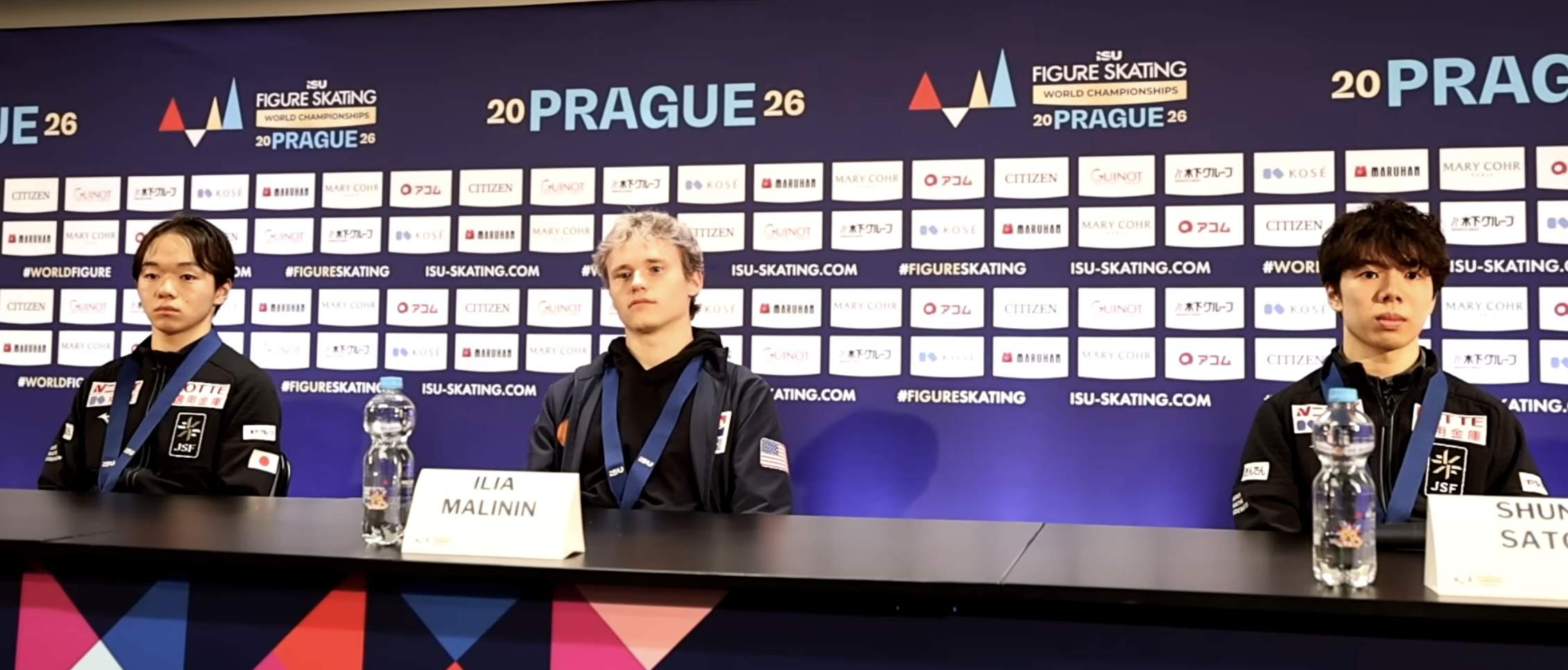
Yuma Kagiyama, Ilia Malinin and Shun Sato (L. to R.), the 2026 World Championships medalists, at the press conference following the free skate.
Four months after circulating a set of rules modification proposals that would have radically transformed the sport of figure skating as early as the 2027-28 season, the International Skating Union has apparently decided to hold off on trying to implement any such cataclysmic changes until at least after the next Winter Olympics in 2030.
The ISU will go ahead next season with previously approved changes that could be seen as laying some ground work for the proposals that would essentially reinvent the sport.
In the interim, the ISU pooh-bahs would do well by listening on repeat to a recording of answers given by the three men’s medalists at the recent World Championships to a questioner who asked for their thoughts about the changes.
Or maybe the ISU should already have sought their opinions - and those of all other singles skaters at the world meet level – before imposing new rules on the athletes - especially the changes under discussion that would have as much (or more?) impact on the sport as the end of compulsory figures in 1990 and the introduction of the International Judging System in 2004.
Three-time world champion Ilia Malinin of the United States, four-time world silver medalist Yuma Kagiyama of Japan and 2026 world bronze medalist Shun Sato of Japan all gave thumbs down to the changes, designed overall to reduce the impact of jumps on competitive results.
All three were all taken aback by the idea of having a free skate without jumps, an idea I revealed was under discussion in this column posted in mid-January.
“For me, the rules as they are currently do bring out the beauty of our sport, and I would like that not to change,” Kagiyama said through an interpreter. “I am sure any rules changes should be taking into effect what we athletes think, and if we can be satisfied with the changes.”
“Looking at the specifics of some of these changes, I think it really takes away the level of competition that we as skaters have developed over the years,” Malinin said. “(I think) the ISU should reconsider all these changes and really give an opportunity and a voice to all of us athletes to really come together and realize what’s better for the sport.”
Via email this week, I asked the ISU these questions:
“Did the ISU ask for feedback from a lot of skaters before developing both the proposed ideas about the short and long programs, which I wrote about in January, as well as the rules passed by the 2024 Congress that go into effect as of next season?
“If so, how many athletes were asked? And how was it done?”
The answer I received was long on philosophy and short on specifics:
“The International Skating Union (ISU) works closely with its Members and a broad range of stakeholders on the ongoing development of Figure Skating, Synchronized Skating, Speed Skating, and Short Track,” an ISU spokesperson wrote.
“Athlete input is an essential part of this process. Feedback is gathered through established channels, including engagement with athletes via ISU Members, the ISU Athletes’ Commission, and direct interactions at ISU events. The Chair of the Athletes’ Commission has a seat on the ISU Council in order to ensure that the athletes’ voices are heard and are at the center of decision-making and the ISU welcomes feedback through all channels.”
That skaters as different as Malinin, who personifies in-your-face dynamism and unprecedented jumping ability, and Kagiyama, an accomplished jumper but better known for his exquisite edge flow and subtlety, are in agreement on this subject is evidence enough for reconsideration.
The first chance to do that would likely be the ISU’s biennial congress June 10-12 in Spain. By then, however, skaters would be preparing free skate programs for next season based on the changes due to go into effect.
(FWIW: The ISU approved those changes at its 2024 congress but listened to reason in deciding not to have them go into effect before the 2026 Olympic season.)
One change reduces the number of jumping passes in the free skate from seven to six. One reduces the number of combinations from three to two and removes any point value from the half-loop jump (Euler) used to link the first two jumps in combinations.
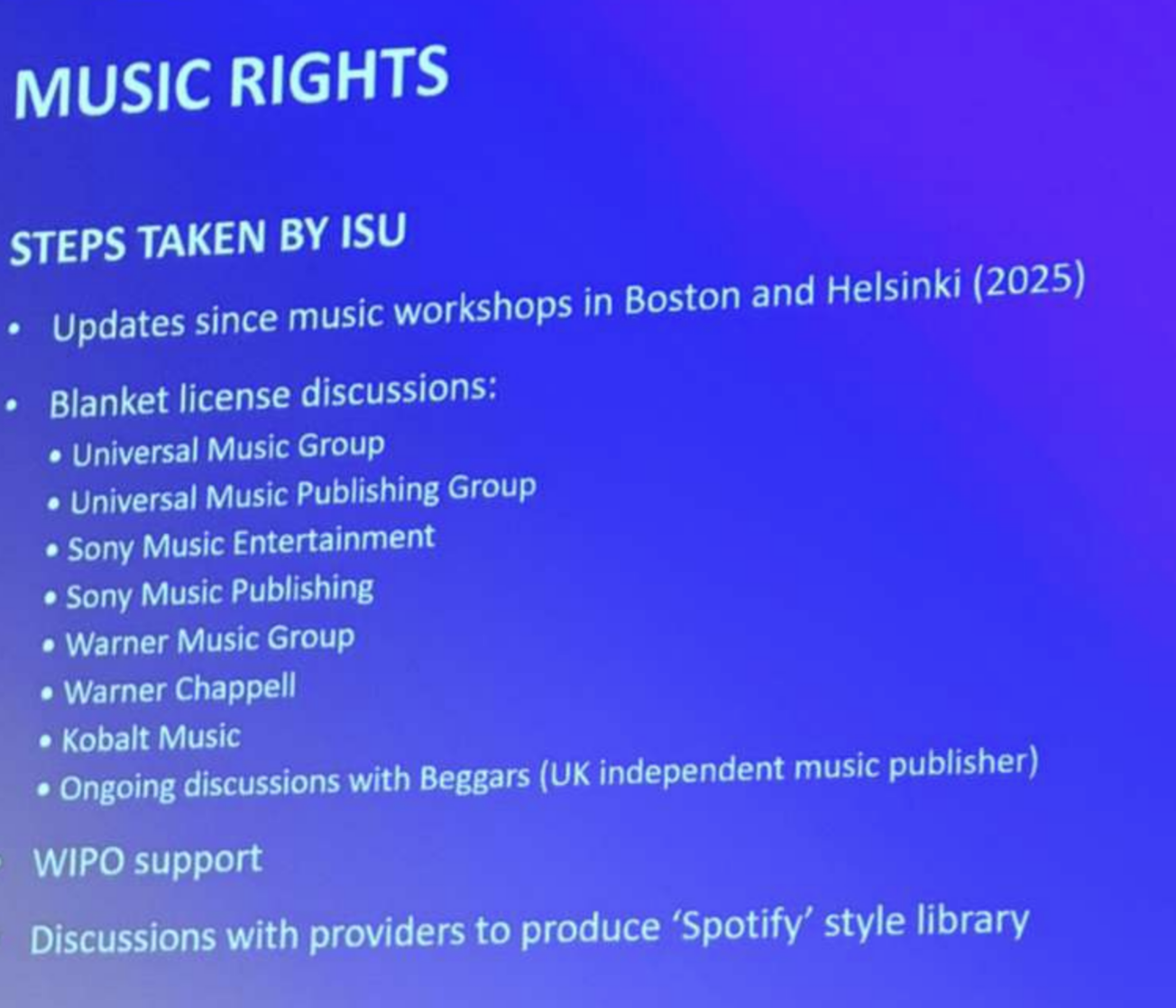
ISU summary of its proposed plan to help athletes deal with music rights issues.
All reduce the number of points a skater can collect in the free skate. That once again makes a mockery of the idea of record scores, which the ISU already effectively bowdlerizes by calling them “highest scores.”
Setting world records had been posited as a fan-friendly plus in approving the International Judging System, which took the sport from being calculable on fingers and toes to one that demanded a super computer.
Every tweak of IJS – and there have such tweaks nearly annually since its institution in the 2004/05 season-- threatened to bring a rain of asterisks. The major change after 2018, when the range of grades of execution was extended from +3/-3 to +5/5, made all scores before 2018 meaningless for comparative purposes but has allowed for new records.
Now, as I noted in this column written before the 2024 congress, records set by men and women before the impending changes take effect essentially will be petrified, since there is no way to compensate for the loss of a jumping pass and a combination.
To a skater like Malinin, the reduction changes the parameters of the sport in a way he hasn’t needed to deal with since 2021-22, when he did both junior (six jumping passes in a three-minute, 30-second free skate) and senior events (seven jumping passes in four minutes.)
“Having to go from six (jumping passes) to seven honestly caused me a lot of problems,” Malinin said at the world meet.
Next season, senior skaters will also have to fill the time made available by the eliminated jumping pass, which likely would have been the third combination. What will they do with it?
The ISU is telling skaters to use the “open” 30 seconds to be creative and do more interpretation of the music. Many people expect only a few skaters will spend much time working on using the new blank space to do more than rest.
What the jump reductions really do are start the sport down the path to the revolutionary changes, one of which shortens the free skate to 3:30.
Reducing the jump content by one will seem like pocket change compared with what is under consideration.
The big ticket item, as I reported in January: Singles would have a “technical” short program of three minutes with a maximum of four jumping passes and an “artistic” free program of three minutes, 30 seconds with NO JUMPS. (The current short program is 2:40 with three jumping passes.)
“I did read online that there's some ideas about abolishing the short program and the free program (as they currently are), and I personally cannot agree with that change,” Kagiyama said.
“I think that figure skating is a great sort of mixture of artistry and sport. And the tension between the two aspects is what is the beauty of figure skating.”
Sato agreed with his countryman.
“The proposed rules would be changing the nature of the competition,” Sato said. “I would like it to not change, but I do respect that there may be different viewpoints.”
A singles program with no jumps would essentially be solo ice dance, and its judging would be even more subjective than that of ice dance.
Sound like a good idea?
Kagiyama said the ISU should be focusing less on rules changes and more on the complicated issue of music rights, which The Athletic outlined in a story published during the 2026 Winter Olympics.
When the ISU in 2014 allowed skaters to use music with lyrics, pop songs largely replaced the centuries-old orchestral music that fell outside copyright. Owners of the newer music sought to protect their rights. It led athletes through a Byzantine maze in attempts to get permission to use the rights.
The ISU is very aware of the problem. At meetings with figure skating constituencies during the recent World Championships, it showed a potential solution in which the ISU would acquire rights from a number of publishers (see photo above) and create a library of available music.
Asked about the status of those negotiations, the ISU had no update.
