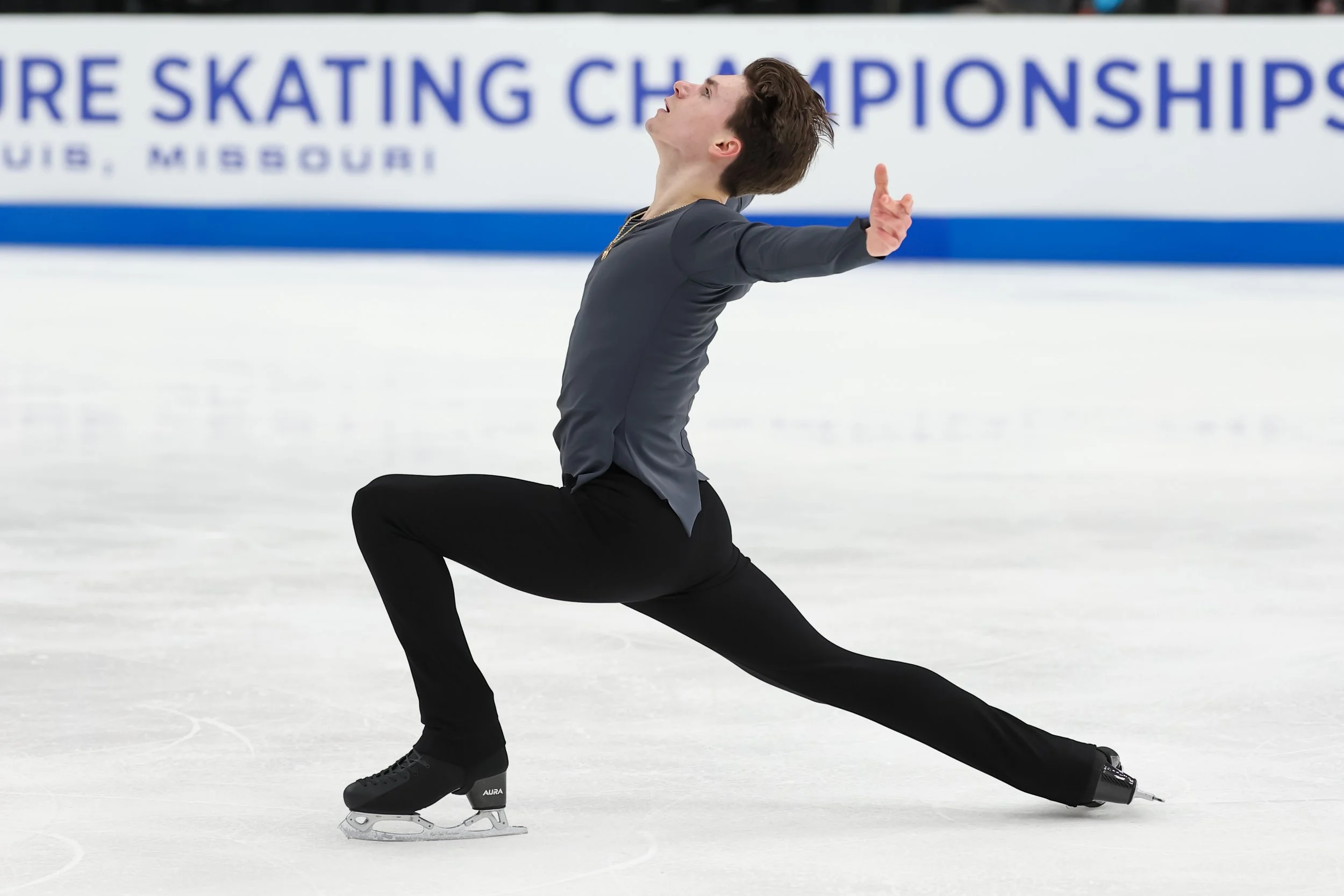
Following his late father's plan, Maxim Naumov became an Olympian

Following his late father's plan, Maxim Naumov became an Olympian

ST. LOUIS, Missouri - A year ago, barely hours after Maxim Naumov had finished a frustrating fourth at the U.S. Championships for a third straight time, his father, Vadim, laid out a plan for his son to avoid that frustration again.

Maxim and his mother, Evgenia Shishkova, listened in a Wichita, Kansas hotel room as Vadim outlined in a 45-minute conversation what, how and when they were going to do everything in the ensuing season to give their only child his best shot at both a podium finish and one of the three men’s singles spots on the 2026 U.S. Olympic team.

"He said, 'We have to be consistent where we haven’t been before, and we have to be strong and resilient,’’’ Maxim said. "That’s exactly what I’ve been carrying through this entire season.”

It was one of the last conservations he would have with his parents, the two-time pairs skating Olympians for Russia who were also his coaches.

Read More
Maxim Naumov channels loss for powerful skate at nationals in Olympic bid

Maxim Naumov channels loss for powerful skate at nationals in Olympic bid

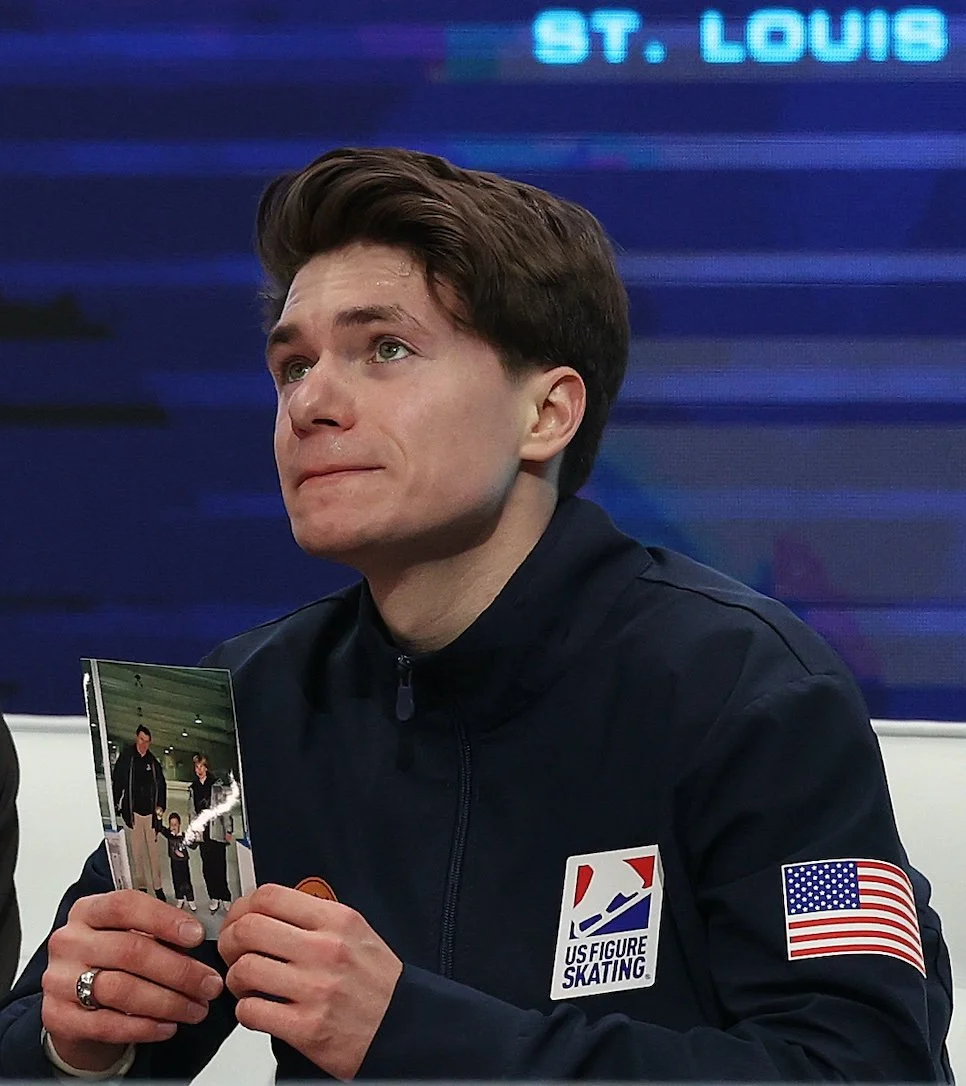
ST. LOUIS, Missouri – Maxim Naumov finished his short program and sat on a white sofa in the area where skaters wait to hear their scores.

With the cameras on him, Naumov held up a photograph of a little boy in white skates standing between two adults on an ice rink in Connecticut. Each adult was holding one of the little boy’s hands to prevent him from falling, the way parents do when their child needs support.

He kissed the photograph - once, twice, three times.

The little boy in the picture was Naumov, who was being introduced to the ice at about age 3.

The adults were his mother, Evgenia Shishkova, and his father, Vadim Naumov, the former pairs world champions and two-time Olympians who had been his coaches until last January 29.

That was the day Max's parents were among the 67 people who died when a U.S. Army helicopter hit their American Airlines jet, which crashed into the Potomac River near Washington, D.C.

Read More

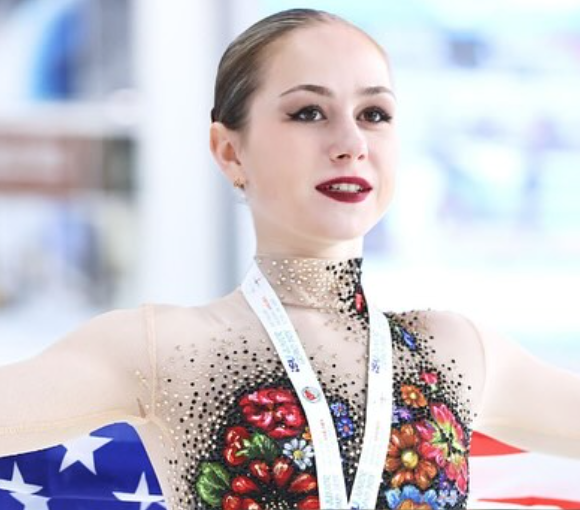
Sophie Joline von Felten heads to figure skating nationals free from Olympic pressure

Sophie Joline von Felten heads to figure skating nationals free from Olympic pressure

Ice skating had been a big part of Inna von Felten’s childhood in Russia.

Her father, Yuri, was a city speedskating champion in Moscow. And when Soviet sports officials visited her kindergarten to look for potential athletes, a key part of the country’s talent identification system, they thought the smallish Inna fit the physical parameters for a pairs figure skater. She would skate pairs from age 4 to 13, her competitive career ended by a knee injury.

Yet the initial motivation for Inna to have her only child, Sophie Joline, try figure skating came from elsewhere.

Inna and her Swiss husband, Daniel von Felten, were on a Christmas holiday trip to Paris when they saw a pop-up seasonal rink on the Champs-Elysees. The setting was so magical Inna imagined skating there one day with her daughter, and she found out young children were allowed on the adult part of the rink with a parent if they could skate unassisted.

“I had her try skating to make my wish come true,” Inna said.

What followed was a clear example of needing to be a little careful about what you wish for. The wish has morphed into a dream come true for her daughter, and it has turned the family’s life into a bi-continental adventure.

Read More

A season of tragedy and triumph for U.S. figure skaters

A season of tragedy and triumph for U.S. figure skaters

The figure skating season that ended nine days ago at the World Team Trophy in Japan was one of overwhelming tragedy and historic triumph for Team USA.

The tragedy happened Jan. 27, when 28 members of the U.S. figure skating family were among the 67 people who died in a crash between their plane and a military helicopter near Washington, D.C.

Among the 28 with ties to the skating community were 11 young skaters, plus some of their parents and coaches, all returning from a development camp following the U.S. Championships in Wichita, Kansas.

At that point, with a pall hanging over them and hearts heavy with pain, the top U.S. skaters still had nearly three months left in the season, with three championship events left:  Four Continents, World Championships and World Team Trophy.

For nearly all of them, going back to practice was both incredibly difficult and necessary, as the U.S. elite sought ways to honor the memories of those who had died by honoring the sport they all loved with their best efforts.

Read More