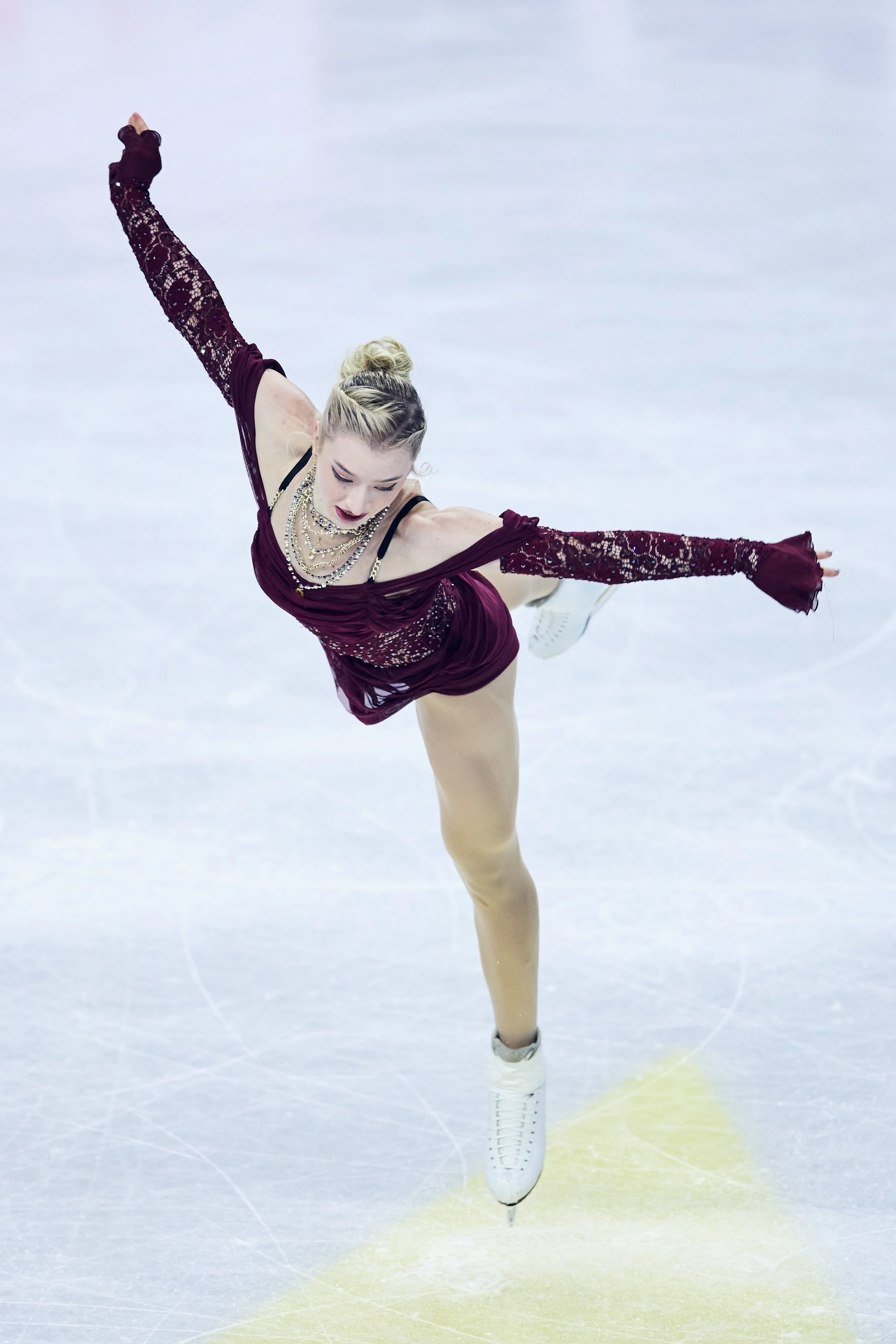
With four Olympic medals, Kaori Sakamoto didn't need gold to cement her legacy

With four Olympic medals, Kaori Sakamoto didn't need gold to cement her legacy

Kaori Sakamoto knew well before the scores were announced. She skated off the ice Thursday night at the Milano Ice Skating Arena with a glum expression on her face. She could sense that the one jump she couldn’t pull off in her free skate was going to keep her from the gold medal.

Alysa Liu, the soon-to-be champion, got up from the leader’s chair as soon as Sakamoto left the ice surface. Liu hugged Sakamoto tight and long. A tear worked its way slowly down Sakamoto’s right cheek. More tears would flow later from the most decorated women’s figure skater in Japanese history.

“I really wanted to skate perfectly here,” Sakamoto said via an interpreter. “Knowing that I couldn’t, and it was the difference for the gold, was painful. I couldn’t stop the tears.”

This was her third and last Winter Olympics. The second, four years ago, had also ended in tears so strong her body shook as she wept. Those tears looked like a mixture of happiness over winning what she calls “a miracle” bronze medal and relief over simply surviving the chaos surrounding the women’s singles event in Beijing.

Read More

Alysa Liu is the champion who can't stop smiling

Alysa Liu is the champion who can't stop smiling

You write this screenplay for a biopic about a figure skater and take it to Hollywood.

You start with a kid whose immigrant father puts her on the ice at age 5. You skip ahead to show her as a 13-year-old beating adults to win national titles when she is too young to compete at even the junior level internationally. You get her to the 2022 Winter Olympics in Beijing when she is just 16.

You have her retire a few months later because she hates a sport that is no longer what she wants to do, hates that it has consumed her life.

You have a great section where she tosses her skates into a closet, where they stay while she hangs out with her friends and four siblings and starts college. Then you watch her take them out 18 months later, go to a rink and land a triple jump as if she never had been away. You see her convince her old coaches to take her back because she wants to compete again — on her terms, not someone else’s.

You make the kid who once saw her sport as a grim exercise to be endured turn into a young woman who can’t stop smiling as she skates and practices skating and, heck, maybe even as she sleeps.

And that’s not even the half of it (don’t forget the spies) before you get to the final scene.

Read More

To Alysa Liu, competing and comforting "just another day"

To Alysa Liu, competing and  comforting "just another day"

Amber Glenn always wears her heart on her sleeve, her joy or dismay clear for the world to see.

“It’s what makes me relatable, but it also makes it hard to hide,” Glenn said after her Wednesday practice at the Milano Ice Skating Arena.

Some 18 hours earlier, her face had displayed increasing levels of devastation, reflecting a heart crushed by the mistake on her favorite jump in the short program. It was an error so costly it left the three-time U.S. champion in 13th place, slightly more than nine points from 3rd, her hopes to contend for a medal probably gone.

Glenn looked inconsolable.

Reigning world champion Alysa Liu saw that. And when she might have been celebrating the strong skate that put her third, just 2.12 points from short program winner Ami Nakai of Japan heading into Thursday’s free skate final, Liu was more concerned about helping her teammate.

To Glenn, that ability to sense the heart of the matter is what has brought Liu to where she is today, delighting in skating for its essence rather than for where she winds up in the standings.

Read More

Alysa Liu performed for the people, especially her family, in Olympic short program

Alysa Liu performed for the people, especially her family, in Olympic short program

Over the two seasons since Alysa Liu returned to figure skating, she has found happiness in performing for the audience rather than for the judges who decide what place she gets in competitions.

Because that audience for the 2026 Olympic short program included her four younger siblings, who had never been able to see their sister skate in either of the two phases of her career, Liu was even more overjoyed at the opportunity to perform for them.

She saw them, sitting with her father and her best friend, during the six-minute warmup that preceded her taking the ice as the first skater in the final group Tuesday night on Milan. She looked at them while heading into her double Axel jump and during her footwork sequence.

“I performed to the people and, like, they're right there, so I performed to them specifically,” Liu said. “It was a really cool moment.”

Read More

Many questions, few answers for Malinin in Milan

Many questions, few answers for Malinin in Milan

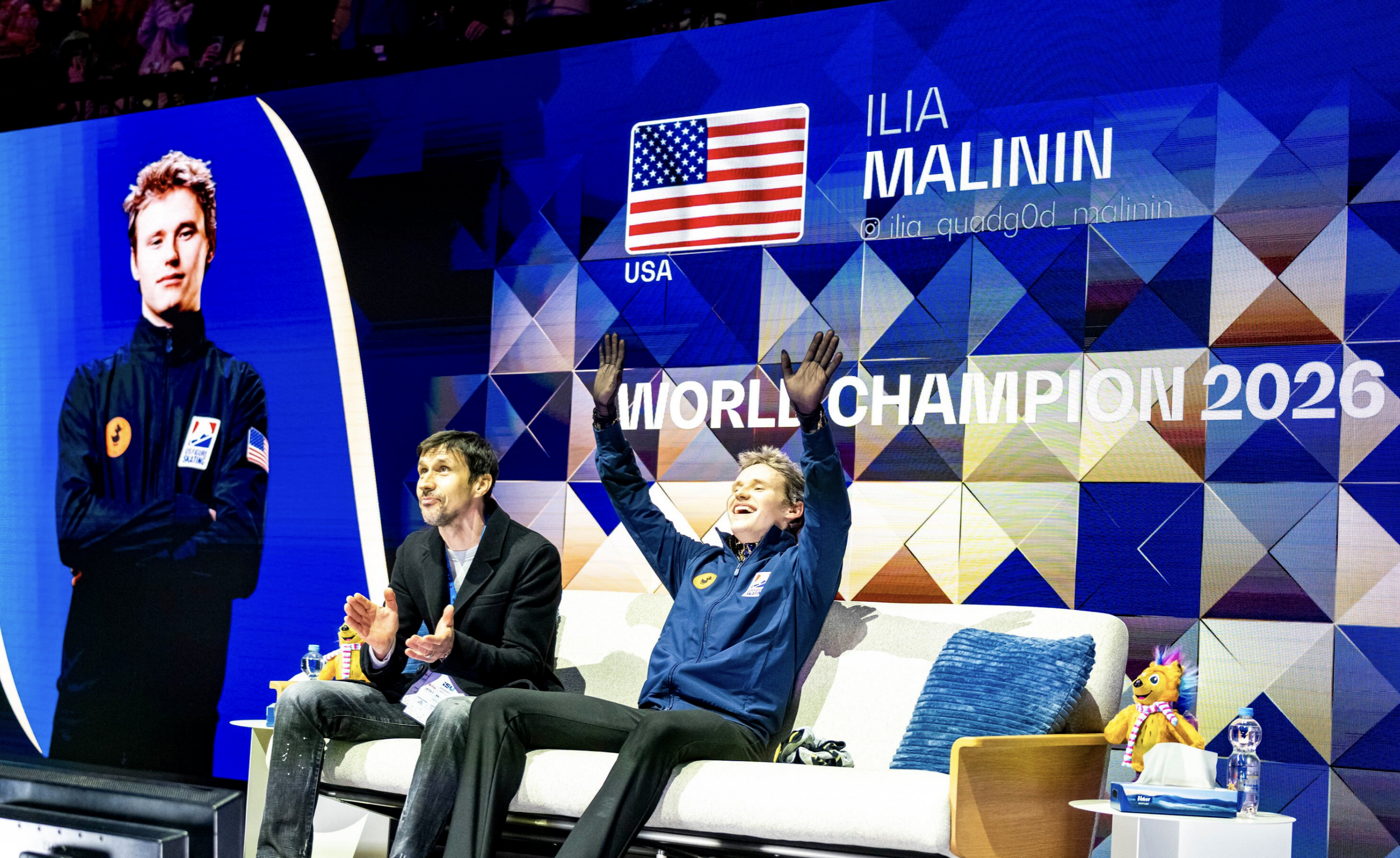
Ilia Malinin smiled broadly as he slapped hands with his father/coach, Roman Skorniakov, on the boards at the Milano Olympic Ice Center.

That was just before he skated to the center of the ice to begin his free skate Friday in the men’s singles event at the 2026 Winter Olympics.

No wonder he smiled. Malinin had a five-point lead over Japan’s Yuma Kagiyama after the short program. And his path toward an Olympic gold medal was seemingly clear of any obstacles after Kagiyama, skating before Malinin, made mistakes big and small on three of his first five jumping passes.

Malinin figured to be smiling even more broadly soon.

But when Malinin finished his four-minute free, he first masked his reaction by covering his face with his gloved hands.

He shook his head, lowered his eyes, shook his head again as he skated off the ice toward his father. Still out of breath, his mouth was open in a narrow rectangle. He shook his head one last time, each shake signaling that Malinin’s incomprehension was complete, just as it was for everybody who had watched him come undone.

Read More