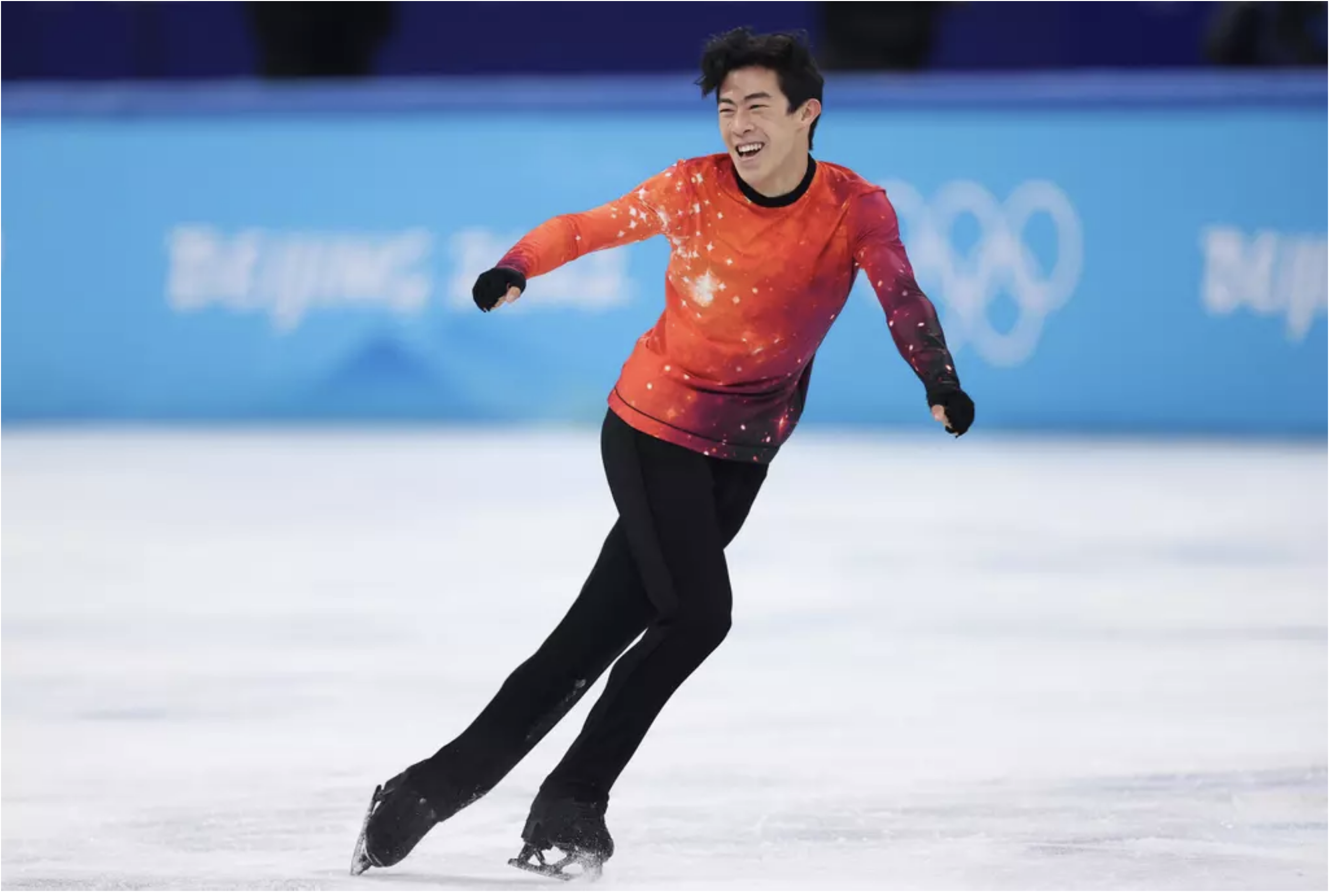
Nathan Chen, a polymath on ice, honored by Ice Theatre of New York as Olympic champion who bridges world between sport and dance

Nathan Chen, a polymath on ice, honored by Ice Theatre of New York as Olympic champion who bridges world between sport and dance

In 2017, not long after Nathan Chen had won his first of what would be six straight U.S. titles in figure skating, we talked briefly about his background in ballet.

Now, a lot of figure skaters mention having done ballet, but it is usually little more than something for a sentence in their bios.

But he did not see it the way most skaters do, as just another box to check, like sessions to work on strength, flexibility and endurance.

Chen was serious about the dance lessons, as many as six per week, that he took for 6 ½ years at Ballet West Academy in Salt Lake City.  He started the lessons at age seven to help his skating.  He kept them up for a less pragmatic reason.

“I love ballet,” he said.

Read More

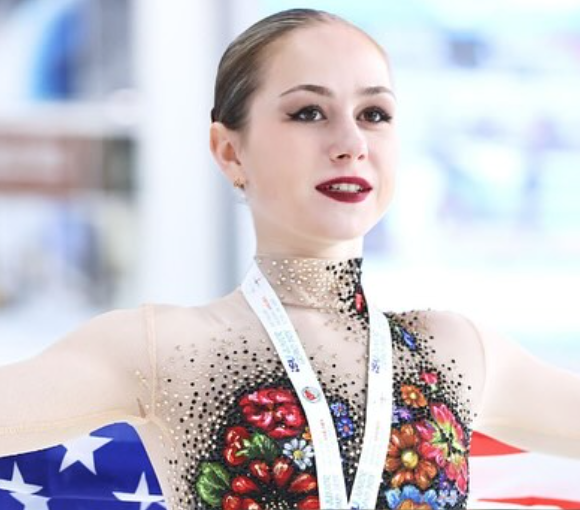
Sophie Joline von Felten heads to figure skating nationals free from Olympic pressure

Sophie Joline von Felten heads to figure skating nationals free from Olympic pressure

Ice skating had been a big part of Inna von Felten’s childhood in Russia.

Her father, Yuri, was a city speedskating champion in Moscow. And when Soviet sports officials visited her kindergarten to look for potential athletes, a key part of the country’s talent identification system, they thought the smallish Inna fit the physical parameters for a pairs figure skater. She would skate pairs from age 4 to 13, her competitive career ended by a knee injury.

Yet the initial motivation for Inna to have her only child, Sophie Joline, try figure skating came from elsewhere.

Inna and her Swiss husband, Daniel von Felten, were on a Christmas holiday trip to Paris when they saw a pop-up seasonal rink on the Champs-Elysees. The setting was so magical Inna imagined skating there one day with her daughter, and she found out young children were allowed on the adult part of the rink with a parent if they could skate unassisted.

“I had her try skating to make my wish come true,” Inna said.

What followed was a clear example of needing to be a little careful about what you wish for. The wish has morphed into a dream come true for her daughter, and it has turned the family’s life into a bi-continental adventure.

Read More

By the numbers, Russia's Petrosian looks golden at 2026 Olympics. Will pressure and her coach's past factor in?

By the numbers, Russia's Petrosian looks golden at 2026 Olympics.  Will pressure and her coach's past factor in?

Figure skating has become more and more of a math exercise since the sport began using its new scoring and judging system in the 2004-05 season.

If it were only a numbers game, you could securely place a bet on 17-year-old Russian Adeliia Petrosian becoming Olympic women’s singles champion next February because she has mastered high-scoring jumps none of the other contenders are likely to try.

But human behavior factors into the final score, so placing that bet involves more of a gamble than it might seem.

Read More

Making World Championships put Andrew Torgashev ahead of his skating game plan

Making World Championships put Andrew Torgashev ahead of his skating game plan

The season wasn’t supposed to go this way for Andrew Torgashev.

Torgashev came into it hoping only to remind everyone he was not done competing after two straight seasons lost to a lingering foot injury, to show that a one-time phenom who had won the U.S. junior title eight years ago at age 13 could get back in the mix with the top American men.

“I was planning to get back to training after nationals and come back to competition with more quads next season in hopes to make the world team,” he said.

His coach, Rafael Arutunian, had the same plan.

Both were duly surprised when Torgashev won the free skate at the U.S. Championships, finished third overall behind Ilia Malinin and Jason Brown, and was provisionally named with them to the U.S. team for next week’s world championships in Saitama, Japan.

Read More

Chen's autobiography provides a rare revelatory look at the man who won Olympic skating gold a year ago

Chen's autobiography provides a rare revelatory look at the man who won Olympic skating gold a year ago

The idea of covering figure skating is something of a contradiction in terms.

Oxymoronic, if you will, like covering all individual sports, in which athletes compete infrequently, train all over the world, and the media rarely sees them in practice.  A far cry from my experiences covering pro football, baseball and hockey, when I saw the athletes nearly every day. The latter is what a journalist thinks of as covering a sport.

I wrote about Nathan Chen’s figure skating career for seven years, beginning with the 2016 U.S. Championships, which would be one of his many history-making performances.

I saw him only at competitions, when the chances to have insightful conversations are minimal.

Even though Chen was gracious enough to do several one-on-one telephone interviews with me, they were generally brief – even if he always spoke so fast you could get 20-minutes-worth of answers in a 15-minute call.

So I never had any misconceptions about really knowing Chen or his family or what he (and they) went through in the nearly 20 years between his putting on skates for the first time and his winning the men’s singles gold medal at the Olympics exactly one year ago.

Sure, there snippets of “revelations,” one coming soon after Chen’s Olympic triumph when his coach, Rafael Arutunian, mentioned giving Chen back money his mother had paid for lessons because he knew how pressed they were for funds.  And, in doing a story about his years taking ballet, I learned from his teachers what a quick study and gifted dancer he was.

But how little I or anyone outside the shy Chen’s inner circle knew about him became apparent in reading his recently published autobiography, “One Jump at a Time,” written with Time magazine’s Alice Park.

Read More