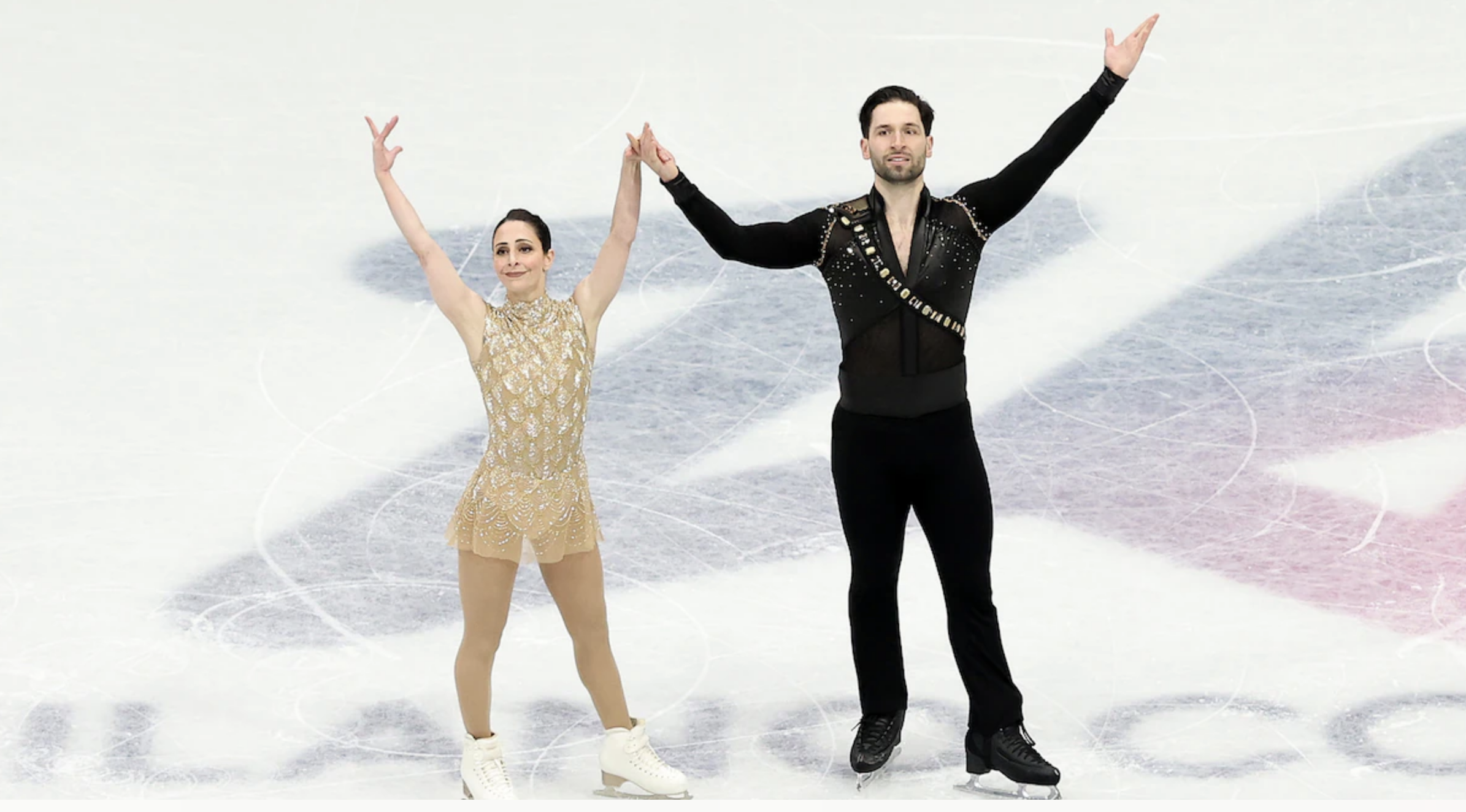
Her choice of music is no accident: Bradie Tennell is on a personal mission of trying to make another Olympic team

Her choice of music is no accident: Bradie Tennell is on a personal mission of trying to make another Olympic team

The story of Bradie Tennell’s long and decorated figure skating career has a satirically cartoonish side to it, which is something she wryly acknowledges, no matter that it has hurt like heck at times to be its protagonist.

“I have definitely felt a bit like Eeyore,” Tennell said, recalling the donkey in A.A. Milne’s Pooh stories with a perpetually aggrieved and ironically comedic view of his plight.

“They’re funny things, Accidents. You never have them till you’re having them,” Eeyore says in The House at Pooh Corner.

How true that has been for Tennell, 27, who makes her Grand Prix season debut this weekend at Skate Canada in Saskatoon, Saskatchewan. For the last five seasons, it has been one thing after another for the two-time U.S. champion and 2018 Olympic team event bronze medalist.

Injuries. Boot problems. More injuries. Blade issues. Tennell kept trying to avoid having the other boot drop, because it usually hit her leg. Whether her travails were purely accidental or just the damage elite athletes incidentally do to their bodies and equipment, she had them all while trying to make another Olympic team.

Read More

Bradie’s back: Tennell wows in U.S. Figure Skating Championships return from nightmare

Bradie’s back: Tennell wows in U.S. Figure Skating Championships return from nightmare

SAN JOSE, California — Bradie Tennell stood at the end boards, her back to the ice surface, her attention on trying to take in what her imposing coach, Benoit Richaud, was telling her in the final seconds before she took the ice for Thursday’s short program at the U.S. Figure Skating Championships.

It was hard for Tennell to stay focused on – or even hear – what Richaud was saying. A group of kids from U.S. Figure Skating’s development camp, who were sitting in the stands near Tennell, started screaming their lungs out when they were shown on the SAP Center video board. Harry Styles’ “Watermelon Sugar” was blasting at approximately 10 million decibels on the arena’s sound system.

“It was very distracting,” Tennell said, eschewing an athlete’s usual cliché about nothing being able to break her concentration. “But this past year has taught me nothing comes easy.”

It was a year of injuries, re-injuries, new injuries. A year when the two-time U.S. champion had been physically unable to compete for a spot on a second Olympic team in 2022. A year when Tennell turned her life inside out, moving to France to train with Richaud, only to have more setbacks.

“I’ve definitely had my share of bumps in the road on the way here,” Tennell said. “This was a very long time in the making.”

Read More

Bradie Tennell returns to U.S. Figure Skating Championships after nightmarish comeback

Bradie Tennell returns to U.S. Figure Skating Championships after nightmarish comeback

Bradie Tennell was ready. Her bags were packed for an early October trip to the Japan Open, an event that had would have symbolic resonance for her. It was to bring a traumatic part of her life full circle toward its end.

Tennell would be returning to figure skating competition in the same country where she had last competed 20 months earlier, at the 2021 World Team Trophy, before a right foot injury that frustratingly defied diagnosis.  The two-time U.S. champion had missed an entire competitive season, missed a chance at going to a second Olympics, missed the part of her identity that was Bradie Tennell the athlete.

It was the day before she was to leave for Japan. Tennell was practicing at her new training base in Nice, France, where she moved last September from her home in suburban Chicago (before her injury, she had been training in Colorado Springs). She was hoping such a dramatic change could bring renewed energy to her oft-delayed comeback.

Tennell had been training well, regularly doing clean program run-throughs in practice. She had been able to work her way back slowly and deliberately, with a schedule that allowed her to be patient.

And then, in her words, “something weird” happened on the landing of a triple toe loop jump. And now she had pain in her left foot, and the trip to Japan was off, as was a planned trip to Hungary for the Budapest Trophy a week after the Japan Open, as was … another season?

Read More

The Olympic skating season so far: Injuries and Russian women (and more Russian women. And more. . .)

The Olympic skating season so far:  Injuries and Russian women (and more Russian women.   And more. . .)

A baker’s dozen of takeaways halfway through the Grand Prix season – and just under three months from the start of the 2022 Winter Olympics:

1. The injury list added two big names in the last week: Yuzuru Hanyu of Japan, the two-time reigning OIympic champion, and reigning world bronze medalist Alexandra Trusova of Russia, who won Skate America, both have withdrawn from this week’s NHK Trophy with foot injuries, meaning neither can qualify for the Grand Prix Final Dec. 9-12 in Osaka, Japan.

Others previously on the “disabled list”: Japan’s Rika Kihira, the 2018 Grand Prix Final winner and reigning national champion, withdrew from both her scheduled Grand Prix events, as did reigning U.S. champion Bradie Tennell.

Read More

Lindsey Vonn, who sped past limits to top of ski racing (and sometimes flew into safety nets, as she did again in her penultimate race), is coming to a stop

Lindsey Vonn, who sped past limits to top of ski racing (and sometimes flew into safety nets, as she did again in her penultimate race), is coming to a stop

I am not a skier.  So, when I began intermittently writing about the sport in the 1980s, I had no first-hand appreciation of the speeds top Alpine ski racers reached – and the danger that sped along with them.

Television didn’t help, because the head-on camera angle does not provide a frame of reference.  And you could tell me they were hitting 75 miles per hour, but I had no perspective on what that meant until the 1989 World Championships in Vail, Colo.

One day during women’s downhill training, I hiked partway up the side of the final pitch to the finish.  From that vantage point, with the skiers coming past me rather than coming at me, as they did when I stood in the media area at the finish, it was very clear how fast they were moving.  Frighteningly fast.

Read More